Exporting to the GCC: Understanding Halal Requirements
Shariah review: Mufti Abdul Sattar Madani · Editorial standards

For many manufacturers, the Gulf Cooperation Council is the destination that makes Halal certification non-negotiable. The GCC market is large, affluent, and serious about Halal compliance — and its requirements are among the most demanding anywhere. Understanding how acceptance actually works there is the difference between a shipment that clears and one that sits at the border.
Acceptance runs through recognition
The first thing to understand is that no certificate is accepted in the Gulf simply because it exists. Acceptance flows through recognition: the relationships between a certification body, the destination's national authorities, and the regional standards framework. A certificate that is not recognised through one of those routes does not help you at customs, however rigorous the underlying audit was.
This is where the partner network is decisive. HCC's reach into Gulf markets is reach through that network — products certified by HCC are recognised in the destination markets reached via its partners and through alignment with the relevant regional standards. The honest framing matters: HCC does not unilaterally grant Gulf access; it connects your certificate to the recognition routes that the Gulf authorities rely on.
The role of regional standards
The Gulf states coordinate their Halal requirements through regional standards bodies, and alignment with those standards is the backbone of acceptance. For a manufacturer, this means the audit is not conducted against a generic checklist but against the requirements that the destination market actually enforces. Ethanol thresholds, ingredient sourcing rules, and slaughter requirements are all evaluated against the standard that governs the market you are shipping to.
A Gulf-bound certificate is built for the border, not just the boardroom.
What the Gulf market expects
- A certificate recognised through the appropriate route, not merely a valid one in the abstract
- Ingredient and source documentation that satisfies the destination's standard
- Clear product scope and labelling that matches the certified range
- Chain-of-custody from facility to port of dispatch, so integrity is provable on arrival
- A certificate identifier that can be confirmed independently at the border
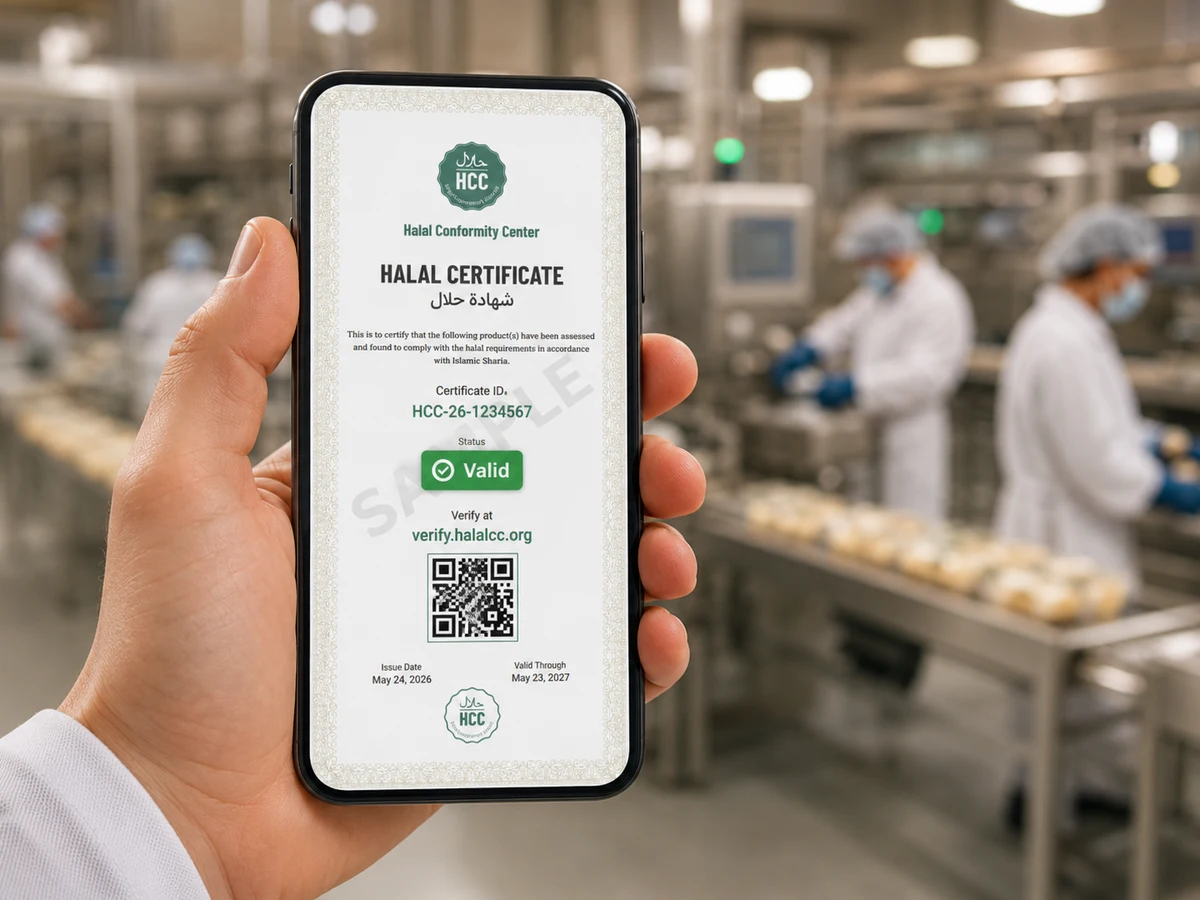
That last point is easy to underrate. A customs officer or importer in the Gulf needs to confirm your certificate quickly and without taking your word for it. An HCC certificate carries an ID that can be checked at verify.halalcc.org — and queried via a JSON endpoint for automated checks — so the confirmation takes seconds rather than a round of emails.
One certificate, multiple markets
Manufacturers shipping across the Gulf often assume they need a separate certificate for each country. Usually they do not. A single certificate can carry a multi-market scope, with the covered markets stated on the record. The work is in mapping your destination markets against the available recognition routes up front, so the scope is right before the first container moves.
Preparing to export to the Gulf
The practical sequence is straightforward. Define the markets you are targeting. Assemble the ingredient and source documentation the relevant standard requires. Confirm that your chain of custody is documented to the port of dispatch. And make sure your certificate is recognised through a route the Gulf authorities accept — not just technically valid, but actually useful where the shipment lands.
Get those pieces in place and Gulf export becomes a process rather than a gamble. The market is demanding, but it is also predictable: it rewards documentation, recognition, and a certificate that holds up at the border. That is exactly what a verification-first certification body is built to provide.

Halal Logistics and Chain of Custody
A product can be certified at the line and still lose its integrity in transit. Chain of custody is how a Halal claim survives the journey to the shelf.
Why Verification Matters More Than the Mark
A Halal logo is only as good as the record behind it. Real-time verification is what turns a claim into trust — and protects honest makers from fake marks.

The Halal Certification Process, Step by Step
From the first application to a publicly verifiable certificate and the annual re-audit that keeps it honest — how Halal certification actually works.
Ready to get certified?
Average issuance is about ten days from a clean application. Submit a batch for audit, or talk to a certification advisor about your scheme, market, and timeline.